A crash involving a commercial truck creates legal problems that look nothing like a standard car accident case. A Stevens Point truck accident lawyer at Anderson O'Brien, LLP, handles the federal regulations, corporate defense tactics, and overlapping insurance layers that make these claims uniquely difficult.
If a trucking company or its insurer has already contacted you, that contact is not routine courtesy. Commercial carriers often send rapid-response teams to crash scenes within hours. They collect evidence and build a defense before you have spoken with anyone on your side.
To speak with our team about a truck collision in central Wisconsin, call (715) 344-0890 for a free initial consultation.
Are you looking for legal advice?
Let one of our experienced attorneys assist you today.
- How Do Truck Accident Claims Differ From Car Accident Cases?
- Who May Be Liable After a Truck Accident in Wisconsin?
- Why Choose Anderson O'Brien, LLP, After a Wisconsin Truck Accident?
- What Evidence Helps Prove a Wisconsin Truck Accident Claim?
- How Does Comparative Negligence Affect Truck Accident Claims in Wisconsin?
- What Compensation May Be Available After a Truck Crash?
- How Does Truck Traffic in Central Wisconsin Affect These Claims?
- What Happens After You File a Truck Accident Claim in Wisconsin?
- FAQs for Stevens Point Truck Accident Claims
- Talk to Our Stevens Point Team About Your Truck Accident Claim
How Do Truck Accident Claims Differ From Car Accident Cases?
Truck accident claims usually involve more evidence, more insurance coverage questions, and more potential defendants than a standard passenger-vehicle crash. Those differences affect how quickly evidence disappears, how fault gets disputed, and how aggressively the defense responds after a serious collision.
| Factor | Car Accident Claim | Truck Accident Claim |
| Potentially liable parties | Typically 1–2 drivers | Driver, carrier, broker, loader, maintenance contractor |
| Insurance layers | One policy per driver | Primary, excess, and umbrella policies are common |
| Governing regulations | State traffic laws | State laws plus FMCSA federal regulations |
| Evidence sources | Police report, photos, witnesses | Tractor engine and event data recorders, ELD data, driver logs, inspection reports, dispatch records, onboard cameras |
| Defense resources | Individual insurer adjusters | Corporate legal teams and rapid-response investigators |
These distinctions shape nearly every part of a Wisconsin truck accident claim.
Why Does Evidence Disappear Faster in Truck Cases?
Most commercial trucks on the road have an event data recorder (EDR) and/or Event Data Recorder that will record the moments before the accident; however, that data can be lost or overwritten if not quickly preserved. Electronic logging device (ELD) data, which tracks a driver's hours behind the wheel, may be overwritten under routine retention cycles. Onboard camera footage, GPS logs, and dispatch communications often fall outside mandatory preservation windows.
That timeline is why early legal action carries real urgency. A preservation letter sent to the carrier within the first few days may prevent the loss of data that later becomes critical to proving fault.
How Do Federal Trucking Regulations Affect Wisconsin Claims?
FMCSA hours-of-service rules limit how long a commercial driver may operate before taking a mandatory rest break. A driver hauling freight along I-39 through Portage County is subject to those same federal limits.
When dispatch records show a driver exceeded rest requirements before a crash, that violation may establish a strong basis for negligence. Other federal standards cover pre-trip inspections, brake maintenance, and cargo securement. Each creates a potential source of liability that does not exist in passenger vehicle cases.
Who May Be Liable After a Truck Accident in Wisconsin?

Liability in a Wisconsin truck crash often extends well beyond the driver. Multiple parties may share responsibility.
What Role Does the Trucking Company Play?
The carrier that employs or contracts with the driver bears responsibility for hiring, training, supervision, and vehicle maintenance. If a company hired a driver with a disqualified CDL or deferred required brake inspections, those decisions may form the basis of a negligence claim against the carrier itself.
Wisconsin courts recognize “respondeat superior” liability. In plain terms, an employer may be held responsible for an employee's actions made within the scope of employment.
What If a Cargo Loader or Maintenance Contractor Contributed to the Crash?
Third-party liability is common in truck collision claims. A company that serviced the truck's brakes, loaded the cargo, or manufactured a defective part may share fault.
Central Wisconsin sees significant agricultural and logging truck traffic. An improperly secured load of timber that shifts during transit and causes a rollover raises liability questions about whoever loaded or inspected that cargo. These claims require a review of loading records, weight distribution documentation, and securement inspection logs.
Why Choose Anderson O'Brien, LLP, After a Wisconsin Truck Accident?
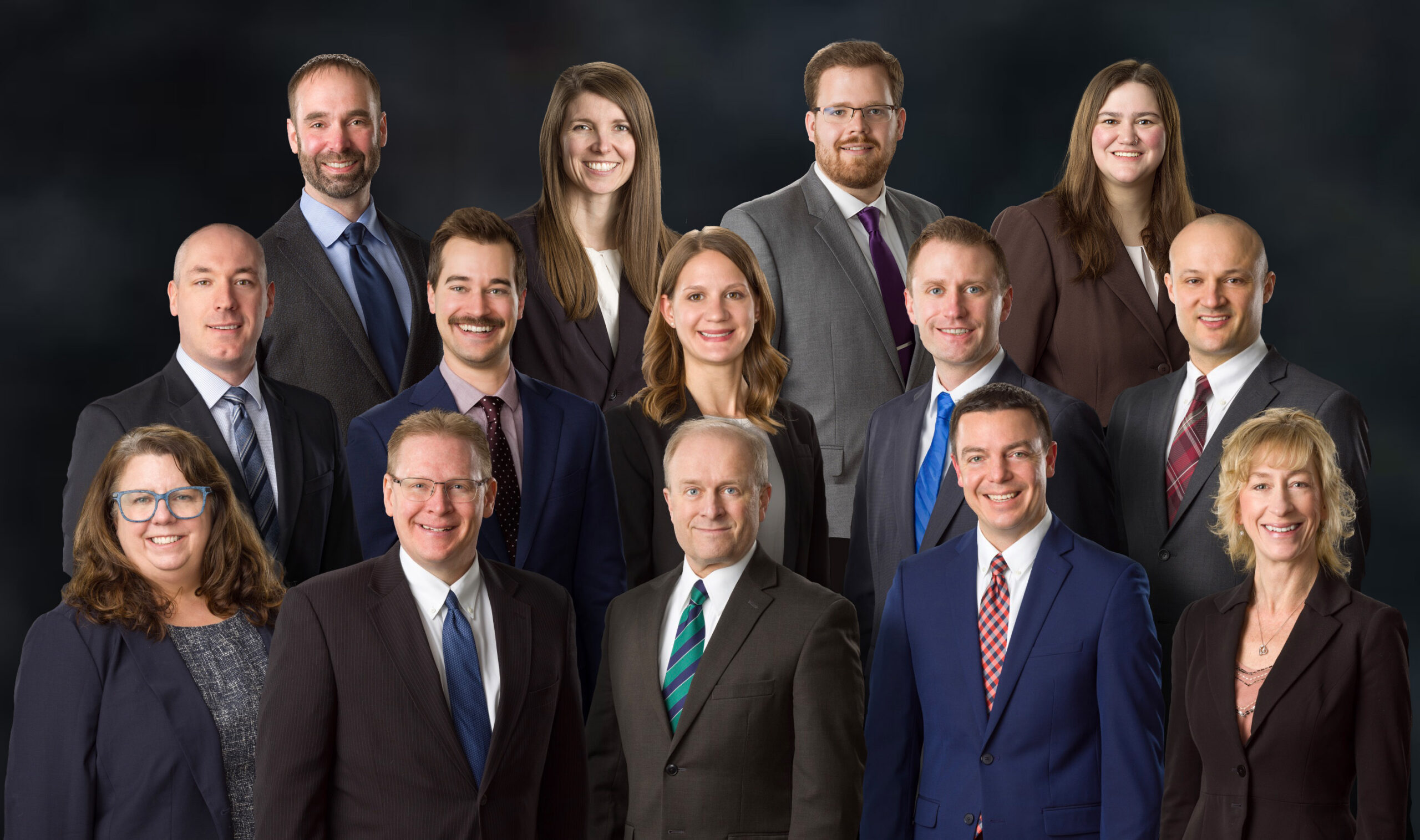
Anderson O'Brien, LLP, has served Stevens Point and Portage County since 1886. That long history in central Wisconsin gives our attorneys familiarity with local courts, judges, and the procedural realities of litigation in this region.
Trucking cases demand a team approach. Our firm draws on the combined experience of multiple attorneys who concentrate in personal injury, wrongful death, and complex negligence claims. That collaborative model matters when a single case involves federal regulations, corporate defendants, and layered insurance disputes.
We have ready access to accident reconstruction experts that can inspect, download and preserve evidence from the involved truck and trailer.
We are local to Stevens Point. Our attorneys live and practice in the community they represent. That proximity means familiarity with the freight corridors, agricultural operations, and winter driving conditions that shape truck accident claims in this part of Wisconsin.
We take truck accident cases on a contingency fee basis. No attorney's fees are owed unless the claim results in a recovery, and initial consultations are free.
If you are dealing with insurer pressure or uncertainty about a truck crash claim, call (715) 344-0890 to talk through the specifics of your situation.
What Evidence Helps Prove a Wisconsin Truck Accident Claim?
The strongest truck accident claims rely on evidence that most people would not think to request. Police reports and medical records matter, but records unique to commercial trucking canplay a more significant role.
Evidence central to Wisconsin truck crash claims includes:
- Event Data Recorder / Engine Control Module are sometimes referred to the truck’s black box that records its actions in the moments before the crash
- Electronic logging device (ELD) data records hours of service and may reveal violations of federal rest requirements
- Driver qualification files contain CDL status, medical certifications, employment history, and prior violations
- Dispatch and trip records show delivery schedules, route assignments, and driver-carrier communications
- Vehicle inspection and maintenance logs document whether the carrier met federal safety standards
- Onboard camera and GPS data may capture pre-crash moments and confirm speed, braking, and location
Obtaining these records often requires formal legal action. Trucking companies are not obligated to voluntarily hand over internal files.
What Is Black Box Data?
Most commercial trucks carry an event data recorder. This device captures speed, braking patterns, throttle position, and other mechanical data in the seconds surrounding a collision. In a disputed-fault case, black box data may confirm or contradict the driver's account.
Retrieving this data requires specific technical tools and timely action. If the truck returns to service before the data is downloaded, that information may be gone permanently.
How Does Comparative Negligence Affect Truck Accident Claims in Wisconsin?
Wisconsin follows a modified comparative negligence system under Wis. Stat. § 895.045. An injured person may still recover reduced compensation as long as their share of fault does not reach 51 percent. At 51 percent or above, recovery drops to zero.
That threshold matters because trucking company defense teams routinely argue that the other driver contributed to the crash. A claim that the injured driver followed too closely or misjudged stopping distance may shift a meaningful percentage of fault.
What Does Comparative Negligence Look Like in Practice?
Consider a collision on Highway 10 west of Stevens Point where a semi driver ran a red light, but the other driver was speeding. A jury might assign 80 percent fault to the truck driver and 20 percent to the other driver.
Under Wisconsin's rule, total damages would be reduced by 20 percent. On a $500,000 claim, that means $100,000 less in recovery. Every piece of evidence that clarifies what happened before the crash may influence how fault is divided.
What Compensation May Be Available After a Truck Crash?
Wisconsin law allows injured individuals to pursue several categories of damages in a truck accident claim.
Economic damages cover losses with clear dollar figures: medical bills, lost wages, out-of-pocket costs, future medical expenses, and long-term lost earning capacity. For severe truck crash injuries, future costs often represent the largest portion of a claim.
Non-economic damages address harm that is real but harder to quantify: physical pain, loss of mobility, emotional distress, and inability to participate in daily activities. Wisconsin does not cap non-economic damages in most personal injury cases.
Factors that typically influence claim value in truck cases include:
- Duration and intensity of medical treatment, including surgeries and rehabilitation
- Time missed from work and any reduction in future earning capacity
- The percentage of fault assigned under Wisconsin's comparative negligence rule
- Whether the driver or carrier violated federal safety regulations
- The number and type of insurance policies available to cover the claim
Documented FMCSA violations paired with serious injuries and low comparative fault typically produce stronger claims than cases where fault is closely contested.
Call (715) 344-0890 to discuss the factors that apply to your situation.
How Does Truck Traffic in Central Wisconsin Affect These Claims?
I-39 runs through Portage County and carries heavy freight traffic year-round. Commercial carriers moving goods between the Fox Valley, Wausau, and the Twin Cities use this corridor daily. During harvest season, agricultural trucks add to the commercial volume.
Highway 10 connects Stevens Point to the Fox Valley with consistent freight and delivery traffic. Highway 66 carries logging trucks and agricultural vehicles on roads with narrower shoulders and fewer passing zones.
Winter weather creates additional risk across central Wisconsin. A loaded semi at highway speed requires far more stopping distance than a passenger vehicle. On icy pavement, that distance increases dramatically. Winter conditions alone do not excuse unsafe driving, but they raise serious questions when a commercial driver fails to adjust speed for road conditions.
What Happens After You File a Truck Accident Claim in Wisconsin?
The process of filing a truck accident claim starts with a review of the crash report, medical records, and insurance information. If the facts support a viable claim, preservation demands go to the trucking company and its insurer. These letters formally request that ELD data, driver files, maintenance records, and communications be retained and access to the involved truck and trailer to inspect and download the relevant onboard data. .
After preservation is secured, a detailed review of the carrier's records begins. This phase often reveals information that was not apparent from the police report alone.
Truck accident claims can take longer to resolve than standard car crash cases. The involvement of multiple parties and federal regulatory issues adds complexity at every stage. Most claims settle before trial, but thorough trial preparation often influences how the defense evaluates settlement offers.
Under Wis. Stat. § 893.54, the statute of limitations for most personal injury claims in Wisconsin, including truck accidents, is three years from the date of the accident. An important exception is truck (and any motor vehicle) accidents that cause a death have a two year statute of limitation. Missing that deadline typically eliminates the right to file a lawsuit.
FAQs for Stevens Point Truck Accident Claims
Does my health insurance pay my bills while a truck accident claim is pending?
Yes. Health insurance typically covers treatment during the claim process. However, your health insurer may assert a subrogation lien, meaning they have a right to recover what they paid from any settlement or verdict. How that lien is handled affects how much of a recovery the injured person actually keeps.
What if the truck involved was registered in another state?
Jurisdiction depends on where the crash occurred, not where the truck is registered. A collision in Portage County is generally filed under Wisconsin law in Wisconsin courts. The carrier's out-of-state registration may affect which insurance policies apply, but negligence and damages follow Wisconsin rules.
What happens if the trucking company destroys evidence?
Wisconsin courts take evidence destruction seriously. If a carrier destroys records after receiving a preservation demand, the court may issue a spoliation instruction. That instruction allows the jury to presume the destroyed evidence was unfavorable to the trucking company.
Is it worth hiring a lawyer if the trucking company's insurer already made an offer?
An early settlement offer from a trucking insurer rarely reflects the full scope of a serious injury claim. These offers often arrive before the injured person knows their complete medical needs. Reviewing any offer with a lawyer before accepting it may reveal whether the amount accounts for future treatment and lost earning capacity.
Talk to Our Stevens Point Team About Your Truck Accident Claim

Truck collision claims involve layered insurance policies, federal regulations, and evidence that changes quickly after a crash. Trucking companies do not wait to build their defense.
Anderson O'Brien, LLP, has represented central Wisconsin families from our Stevens Point office for over a century. We take truck accident cases on a contingency fee basis, which means no fees are owed unless the claim produces a recovery.
Call (715) 344-0890 or reach us toll-free at 888-583-3333. You may also contact us online to request a free initial consultation.
Are you looking for legal advice?
Let one of our experienced attorneys assist you today.