After a distracted driving crash, people often know exactly what happened. The other driver drifted lanes, never braked, or looked down moments before impact.
The problem is proving it.
Drivers rarely admit they were texting or using an app, and insurance companies often argue there is not enough evidence to show distraction caused the crash.
A Stevens Point distracted driving accident lawyer at Anderson O’Brien, LLP, helps those who are injured to preserve phone records, surveillance footage, and other evidence before it disappears. We also navigate the often-complicated process of negotiating your claim to the insurance company — all the way to court, if needed.
Call (715) 344-0890 for a free initial consultation about your distracted driving crash.
Are you looking for legal advice?
Let one of our experienced attorneys assist you today.
- Why Choose Anderson O'Brien, LLP?
- What Counts as Distracted Driving in Wisconsin?
- How Do You Prove Distracted Driving After a Wisconsin Crash?
- How Can You Prove Someone Was Texting While Driving?
- Why Does the Insurance Company Say There Isn’t Enough Proof?
- How Does Wisconsin Comparative Negligence Affect Distracted Driving Claims?
- What Compensation May Be Available After a Distracted Driving Crash?
- How Do Distracted Driving Crashes Play Out on Central Wisconsin Roads?
- FAQs for Stevens Point Distracted Driving Accident Claims
- Getting Answers About a Distracted Driving Crash in Portage County
Why Choose Anderson O'Brien, LLP?
Many people become frustrated when the driver who caused the crash denies using a phone, even when the collision clearly suggests distraction.
A lot of distracted driving cases depend on evidence most people cannot access on their own, including phone records, app activity, and surveillance footage. It is common for injured drivers to feel powerless when key evidence is controlled by phone companies, employers, or insurers.
Phone carriers respond to subpoenas, not phone calls from those who are injured. Businesses with surveillance footage overwrite recordings on short cycles. Getting preservation requests out quickly often determines whether the strongest evidence survives.
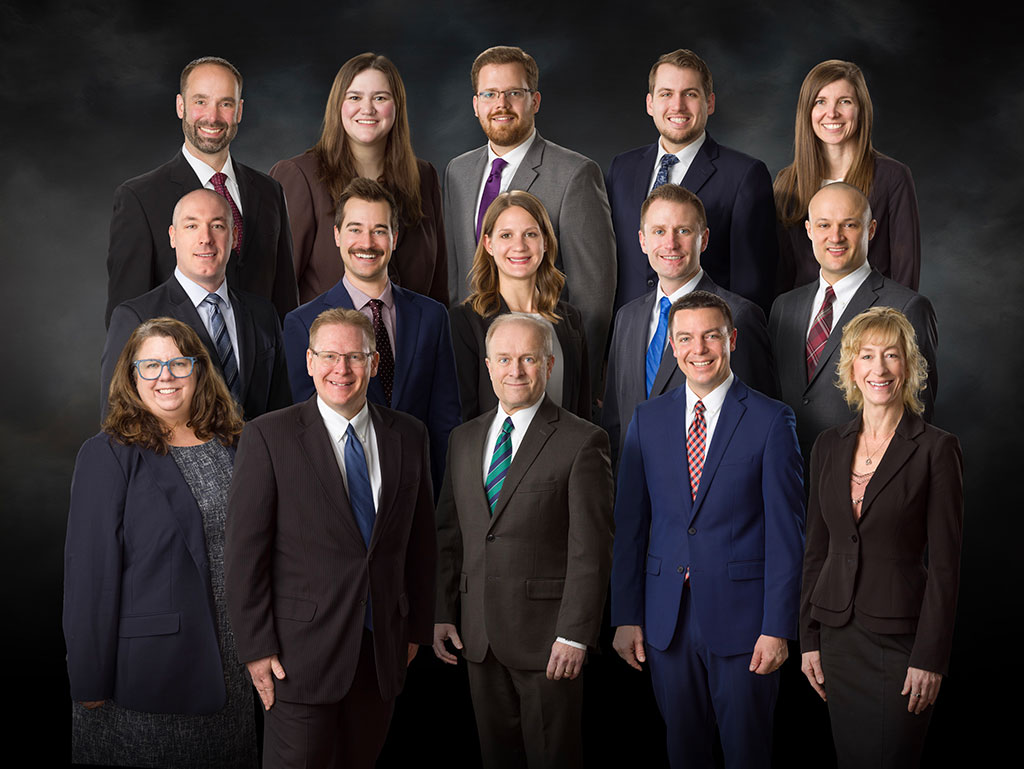
Anderson O'Brien, LLP has handled injury litigation in Portage County Circuit Court for decades. Our attorneys understand how local judges manage discovery disputes over phone records and electronic device data. That familiarity with Portage County procedures matters when the other side resists turning over carrier records or device metadata.
Our team model allows multiple attorneys to review overlapping evidence issues in a single claim. When a distracted driving case also involves commercial vehicle records, comparative fault disputes, or wrongful death, that collaborative approach strengthens case preparation.
We take distracted driving cases on a contingency fee basis, meaning no attorney fees are owed unless the claim produces a recovery. Initial consultations are free and carry no obligation. Call (715) 344-0890 or reach us online to schedule a consultation.
What Counts as Distracted Driving in Wisconsin?
Distracted driving in Wisconsin includes texting, phone use, navigation app interaction, and other conduct that pulls a driver's eyes, hands, or attention away from the road. Wis. Stat. § 346.89 prohibits texting while operating a motor vehicle. The statute also addresses inattentive driving more broadly.
The three recognized categories of driver distraction are visual, manual, and cognitive. Texting involves all three simultaneously, which is why it carries particular weight in crash claims.
Does Distraction Go Beyond Texting?
Modern distraction cases increasingly involve navigation apps, social media feeds, video calls, and infotainment system controls. A driver adjusting a GPS route on Highway 10 is visually and manually distracted even without sending a text message.
For commercial drivers operating along I-39, dispatch systems, fleet communication devices, and onboard tablets create additional distraction sources. These devices may generate usage logs that become relevant evidence after a crash.
How Do You Prove Distracted Driving After a Wisconsin Crash?

Distracted driving claims rely heavily on circumstantial evidence because direct proof is rare. Drivers almost never admit they were looking at a phone at the moment of impact.
The proof comes from device activity, vehicle behavior, and witness observations that together establish a timeline of what the driver was doing before the collision. Crash timing is often the key piece.
If phone records show an outgoing text at 4:17 PM and the crash occurred at 4:17 PM, that overlap creates a strong inference. The message content does not matter. The timing does.
What If the Driver Denies Looking at a Phone?
Denial is the default response in nearly every distracted driving case. The claim does not depend on an admission.
Phone carrier records, app usage data, and device metadata may establish activity that contradicts the driver's account. Even deleted messages and app interactions leave metadata trails. A forensic examination of the device, when obtainable through discovery, may recover timestamps the driver assumed were gone.
What If the Police Report Does Not Mention Distraction?
Officers responding to a crash document what they observe and what drivers report at the scene. If neither driver mentions phone use and no witness raises it, the report may say nothing about distraction.
That omission does not prevent a civil claim. Civil litigation allows access to phone records, device data, and analysis that law enforcement typically does not pursue during a roadside response.
How Can You Prove Someone Was Texting While Driving?
Most distracted driving cases are built from multiple pieces of evidence rather than one “smoking gun.” The goal is to show what the driver was doing in the seconds before the crash.
The evidence that matters most in a distracted driving claim often sits on servers, devices, and cameras that the injured person has no direct access to. Phone activity, surveillance footage, vehicle data, and commercial driver records may help establish what the driver was doing in the seconds before the crash and whether distraction contributed to the collision.
| Evidence Type | What It May Show | How It Is Obtained | How Insurers Dispute It |
| Phone carrier records | Call and text timestamps synced to crash time | Subpoena to the carrier | Argue activity occurred before the crash |
| App usage data | Active apps at the time of collision | Device forensics or app provider records | Claim background processes triggered the data |
| Surveillance footage | Driver behavior seconds before impact | Requests to nearby businesses or traffic cameras | Argue footage is inconclusive or too distant |
| Vehicle event data | Speed, braking, and steering inputs before the crash | Download from the vehicle's event data recorder | Question calibration or interpretation |
| Witness statements | Observations of phone use or inattention | Witness interviews and depositions | Challenge reliability or vantage point |
| Commercial vehicle logs | Device and communication system activity | Discovery requests to the carrier or the employer | Argue logs do not prove eyes were off the road |
Stronger claims combine multiple evidence sources. A single phone record paired with witness testimony and vehicle data creates a more complete picture than any one source alone.
Can Surveillance Footage Help Prove Distraction?
Business security cameras, traffic cameras, and dashcam footage from other vehicles sometimes capture the moments before a crash. A camera at an intersection along Business 51 or near a Highway 10 on-ramp may show the other driver looking down, drifting from a lane, or failing to brake.
This footage has limited retention. Businesses may overwrite security recordings within days or weeks. Footage that exists today may not exist next month. Early preservation requests are a practical priority.
Why Does the Insurance Company Say There Isn’t Enough Proof?
Insurance companies dispute distracted driving claims because distraction leaves no single definitive measurement. Unlike a drunk driving case with a blood alcohol test, there is no standardized distraction score.
Insurers rely on several recurring arguments to challenge these claims:
- Timing gaps, where the insurer argues phone activity occurred minutes before the crash rather than at the moment of impact
- Alternative explanations, where the insurer attributes the crash to road conditions, mechanical failure, or the injured driver's conduct
- Inconclusive evidence, where the insurer acknowledges phone activity but disputes that it caused the collision
- Comparative fault shifting, where the insurer argues the injured person contributed through speed, following distance, or failure to react
Addressing these arguments requires evidence that connects device activity to the precise moment the driver lost control or failed to respond. That connection is what separates a disputed claim from a strong one.
How Does Wisconsin Comparative Negligence Affect Distracted Driving Claims?
Wisconsin's modified comparative negligence statute, Wis. Stat. § 895.045, reduces a claimant's recovery by their percentage of fault. If fault reaches 51 percent or higher, recovery is barred completely.
Distracted driving cases frequently involve comparative fault arguments. An insurer might argue the injured driver was speeding or failed to maintain a safe following distance. Even in a rear-end crash where the other driver was clearly texting, the insurer may try to assign partial fault to the lead driver.
What Happens If Both Drivers Were Distracted?
Wisconsin's fault system allows both drivers to share responsibility. If evidence shows both drivers had active phone use at the time of the crash, a jury allocates fault percentages to each party.
The injured driver recovers compensation only if their fault stays below 51 percent. Dual-distraction scenarios make digital evidence even more important. The strength of each driver's records determines how fault percentages are divided.
What Compensation May Be Available After a Distracted Driving Crash?

A distracted driving crash claim may include compensation for medical bills, lost income, pain, and long-term physical limitations caused by the collision. The distraction element does not create a separate damage category, but it often affects how the claim is valued.
Economic damages cover treatment costs, lost wages, and out-of-pocket expenses tied to the crash. Severe distracted driving collisions, particularly rear-end impacts at highway speed, often produce whiplash injuries, spinal damage, and traumatic brain injuries. Treatment for these conditions extends well beyond initial emergency care.
Non-economic damages address pain, reduced mobility, emotional distress, and loss of daily function. Wisconsin places no cap on non-economic damages in most personal injury claims.
Evidence of clear distraction, especially a documented statutory violation, may strengthen the overall claim. Juries and adjusters often view preventable, avoidable crashes differently from complex multi-factor collisions.
How Do Distracted Driving Crashes Play Out on Central Wisconsin Roads?
Rear-end collisions at controlled intersections and highway merge points account for a large share of distracted driving crashes near Stevens Point. A driver scrolling while traveling at 45 miles per hour has almost no reaction time when traffic ahead stops.
Highway 10 carries steady commuter and commercial traffic through Stevens Point. The stop-and-go patterns during peak hours create conditions where even a brief glance at a phone screen eliminates the safe braking distance. These crashes often produce disputed liability because the rear driver's insurer argues the lead vehicle stopped suddenly.
I-39 presents a different pattern. Highway-speed rear-end crashes on the interstate involve higher impact forces and more serious injuries.
Winter conditions along Highway 66 and rural Portage County roads compound the problem. Reduced visibility and icy pavement leave almost no margin for a distracted driver's delayed reaction.
The statute of limitations for personal injury claims in Wisconsin is three years from the date of the crash under Wis. Stat. § 893.54, with the exception that crashes causing death have a two year statute of limitations. Digital evidence often disappears long before that deadline. Phone carriers, businesses with security cameras, and vehicle data systems all operate on shorter retention cycles.
FAQs for Stevens Point Distracted Driving Accident Claims
Can someone recover compensation if the distracted driver never admitted fault?
Yes. Distracted driving claims do not require an admission. Phone records, app data, witness testimony, and crash reconstruction may establish distraction through circumstantial evidence. Many successful claims rely entirely on records the driver did not know existed.
Can deleted phone activity still become evidence in a crash claim?
Yes. Deleted texts, app interactions, and browsing activity often leave metadata on the device and on carrier or app provider servers. A forensic examination may recover timestamps and usage patterns even after the user deleted visible content.
What if the distraction involved a GPS app instead of texting?
Navigation app use creates the same categories of distraction as texting. Wisconsin's inattentive driving statute covers conduct beyond texting alone. App usage data and device screen-on records may show the driver was interacting with a GPS interface at the time of the crash.
What if the police officer did not issue a citation for distracted driving?
A citation is not required for a civil injury claim. Many distraction cases develop later through phone activity timelines, witness accounts, surveillance footage, or inconsistencies in the driver's explanation of what happened before impact.
Getting Answers About a Distracted Driving Crash in Portage County

Digital evidence in distracted driving cases has a short shelf life. Phone carrier records, surveillance footage, and vehicle data all operate on retention schedules that do not wait for an injury claim to begin.
Anderson O'Brien, LLP, takes distracted driving injury cases on a contingency fee basis. No fees apply unless the claim produces a recovery. Our Stevens Point attorneys handle these claims across central Wisconsin.
Call (715) 344-0890 or contact us online for a free consultation. You may also reach us toll-free at 888-583-3333.
Are you looking for legal advice?
Let one of our experienced attorneys assist you today.