Most people assume uninsured motorist coverage will protect them after a crash. Then they file a claim and realize their own insurance company is treating them like the opposing side.
If you were injured by an uninsured or underinsured driver in Stevens Point or central Wisconsin, you may still have coverage available through your own policy. But these claims often become complicated quickly, especially when the insurer disputes injuries, fault, or medical treatment.
A Stevens Point uninsured motorist accident lawyer at Anderson O’Brien, LLP, can help you understand your options and protect your claim.
Call (715) 344-0890 to talk through your situation. The initial consultation is free.
Are you looking for legal advice?
Let one of our experienced attorneys assist you today.
- What Is the Difference Between UM and UIM Coverage in Wisconsin?
- Why Do UM/UIM Claims Become Disputed?
- How Do Hit-and-Run Claims Work Under Wisconsin UM Coverage?
- What Happens if the Other Driver Only Has Minimal Insurance?
- Why Choose Anderson O'Brien, LLP, for a UM/UIM Claim?
- What Compensation May a UM/UIM Claim Cover?
- How Does Wisconsin Fault Law Affect a UM/UIM Claim?
- What Filing Deadlines Apply to Wisconsin UM/UIM Claims?
- How Do Local Crash Patterns Affect UM/UIM Claims in Central Wisconsin?
- FAQs for Stevens Point Uninsured Motorist Claims
- Clarify Your Coverage Before Making Decisions
What Is the Difference Between UM and UIM Coverage in Wisconsin?

Uninsured motorist coverage applies when the at-fault driver has no insurance. Underinsured motorist coverage applies when the at-fault driver's policy limits are too low to cover the injuries caused. Wisconsin law treats these as separate coverages with different requirements.
Wisconsin requires every auto policy to include UM bodily injury coverage under Wis. Stat. § 632.32. UIM coverage is optional. Drivers who declined it during the policy selection process may not have it.
The distinction matters because uninsured and underinsured claims create different coverage questions, different proof issues, and different disputes with the insurer handling the claim.
| Factor | Uninsured Motorist (UM) | Underinsured Motorist (UIM) |
| When it applies | At-fault driver has no insurance or is unidentified | At-fault driver's coverage falls short of actual damages |
| Required in Wisconsin? | Yes, for bodily injury | No, optional (but strongly recommended to have) |
| Common trigger | Hit-and-run or lapsed policy | State-minimum policy exhausted by medical bills |
| Typical disputes | Whether the unidentified driver existed; injury causation | Whether injuries exceed the at-fault driver's limits; medical necessity |
| Policy limit issues | Capped at your own UM limits | Difference between at-fault liability limits and UIM limits; reducing clauses |
Those differences often shape how the insurer evaluates the claim, what records become important, and whether additional coverage may exist through another household policy.
What Does Wisconsin Require Drivers to Carry?
Wisconsin's minimum liability limits are $25,000 per person and $50,000 per accident for bodily injury. A single emergency room visit, CT scan, and overnight hospital stay may approach that $25,000 threshold. Surgery or rehabilitation pushes well beyond it.
A driver who technically has "insurance" may carry nowhere near enough to cover a serious crash. The gap between the at-fault driver's limits and actual losses is where UIM coverage matters.
Does Wisconsin Require UM Property Damage Coverage?
Wisconsin requires uninsured motorist coverage for bodily injuries but does not mandate uninsured motorist property damage coverage. If an uninsured driver totals your vehicle and your policy lacks UM property damage protection, repair or replacement costs may come out of pocket. Many drivers discover this gap only after filing a claim.
Why Do UM/UIM Claims Become Disputed?
UM/UIM claims pit policyholders against their own insurance carriers. The company you have paid premiums to for years now has a financial interest in paying less on your claim.
People expect their insurer to function like an ally after a crash. Instead, the insurer assigns an adjuster who evaluates the claim the same way any carrier evaluates a liability dispute. That means questioning medical necessity, disputing injury severity, and looking for reasons to reduce the payout.
Common dispute tactics in Wisconsin UM/UIM claims include specific pressure points that many claimants do not expect, including:
- Preexisting condition arguments, where the insurer attributes symptoms to conditions documented before the crash
- Independent medical examinations, where the insurer sends the claimant to a doctor chosen and paid by the carrier
- Gaps in treatment, where time between medical visits is used to argue that injuries were less serious than claimed
- Recorded statement pressure, where adjusters ask detailed questions before the claimant understands the full extent of their injuries
Recognizing these tactics early may change how you approach the claim process.
Why Does My Own Insurance Company Need This Much Proof?
Your insurer evaluates a UM/UIM claim as an adversarial matter once it moves past the initial filing stage. The adjuster's role is to determine whether claimed damages are supported by evidence and fall within policy terms.
Legally, the insurance company is allowed to investigate your claim this way. For many people though, it feels frustrating to pay premiums for years only to face resistance after a serious crash.
How Do Hit-and-Run Claims Work Under Wisconsin UM Coverage?
Hit-and-run crashes create proof problems that other UM claims do not. The at-fault driver is gone. There may be no plate number, no witness identification, and limited physical evidence of the other vehicle.
Wisconsin UM coverage generally applies to hit-and-run collisions. But the insurer may challenge whether the other vehicle made contact with yours. Some policies require proof of physical contact. Others cover "phantom vehicle" scenarios where the other driver caused the crash without direct impact. Depending on specific policy language, there may be reporting requirements to policy and/or the insurance company.
What If There Is Limited Evidence the Other Driver Existed?
Insurers sometimes question whether a hit-and-run actually occurred. Without a witness, surveillance footage, or paint transfer connecting another car to the crash, the carrier may deny the claim.
Police reports, traffic camera footage, nearby business security recordings, and 911 call records all help establish that a second vehicle was involved. Medical records showing crash-consistent injuries add further support.
What Happens if the Other Driver Only Has Minimal Insurance?
Many underinsured motorist claims begin when the at-fault driver carries only Wisconsin's $25,000 per-person minimum. The other driver had insurance. It simply was not enough.
A limits offer from the at-fault driver's carrier may arrive relatively quickly. If medical bills, lost wages, and other damages exceed $25,000, that policy is exhausted. The remaining losses fall to your own UIM coverage, assuming your policy includes it.
Timing matters here. Accepting the at-fault driver's limits without first notifying your own UIM carrier may jeopardize part of the claim. Some Wisconsin policies require the insurer's consent before settling with the at-fault party. Getting that sequence wrong creates complications that are difficult to reverse.
If you have received a limits offer from the at-fault driver's insurer, call (715) 344-0890 before accepting.
Why Choose Anderson O'Brien, LLP, for a UM/UIM Claim?
UM/UIM disputes require familiarity with policy interpretation, medical documentation standards, and the procedural requirements that are unique to first-party insurance claims. Not every personal injury practice handles these cases regularly.
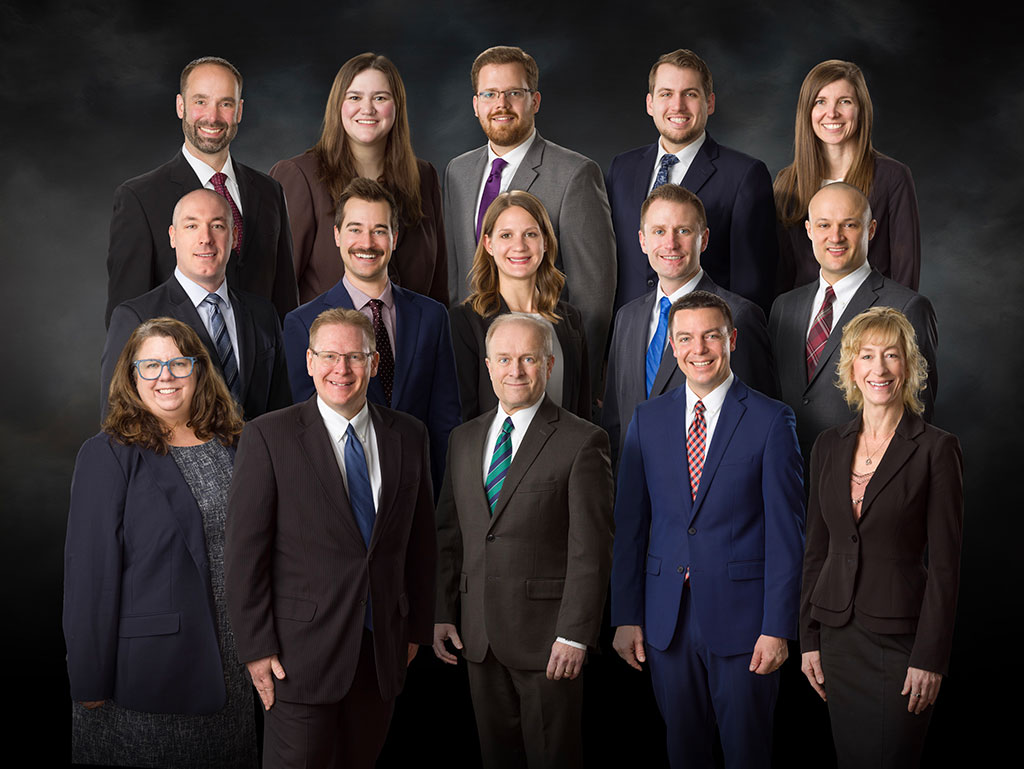
Our firm has represented Portage County residents since 1886. Over that history, we have built a team of attorneys who concentrate in distinct areas of injury law. That collaborative model matters when a UM/UIM claim involves comparative negligence disputes, stacking questions across household policies, and coordination of benefits between carriers.
Local presence makes a practical difference in these claims. Our attorneys know how Portage County Circuit Court handles insurance disputes. They understand the medical documentation patterns from area hospitals, and they practice in the same community as the people they represent.
Consultations are free. We take UM/UIM cases on a contingency fee basis, meaning no attorney fees are owed unless the claim produces a recovery.
What Compensation May a UM/UIM Claim Cover?
UM/UIM coverage applies to the same categories of damages that are available in any Wisconsin personal injury claim. The difference is the payment source: your own policy rather than the at-fault driver's carrier.
Damages that are commonly pursued through UM/UIM claims include:
- Medical expenses from emergency treatment, surgery, rehabilitation, and ongoing care
- Lost wages during recovery, including time missed for medical appointments
- Reduced future earning capacity if injuries affect long-term employment
- Pain, physical limitations, and emotional distress from the crash
- Out-of-pocket costs like prescriptions, medical devices, and transportation to treatment
Policy limits cap what UM/UIM coverage pays. Under a common offset approach, if your UIM policy carries $100,000 and the at-fault driver's $25,000 limit has already been paid, the maximum additional recovery from your own policy is typically $75,000. The math varies by policy structure.
How Does Wisconsin Fault Law Affect a UM/UIM Claim?
Wisconsin's comparative negligence rule under Wis. Stat. § 895.045 applies to UM/UIM claims. If the claimant is assigned 51 percent or more fault, recovery is barred entirely. Below that threshold, damages are reduced by the claimant's fault percentage.
Your own insurer may argue comparative fault to reduce the payout. On a $200,000 claim, a 30 percent fault assignment drops recovery to $140,000. That argument comes from the company holding your policy.
Crash reconstruction reports, witness testimony, traffic camera footage, and police records all help establish fault allocation. Stronger evidence of the other driver's negligence limits the carrier's ability to shift fault onto you as the claimant.
What Filing Deadlines Apply to Wisconsin UM/UIM Claims?
Wisconsin's statute of limitations for UM/UIM claims is controlled by Wis. Stat. 893.43(2), which mandates that UM/UIM claims must be commenced within three (3) years after the cause of action accrues or be barred. For a UM claim, that is likely three years from the date of accident; for a UIM claim, that is three years from the final resolution of the underlying cause of action against the at-fault party and liability insurer.
Your own policy may contain shorter notice requirements. Many Wisconsin auto policies require the insured to report a potential UM/UIM claim within a specified window. Missing that internal deadline, even while the three-year statute remains open, may give the insurer grounds to deny the claim.
The Wisconsin Office of the Commissioner of Insurance provides resources for understanding policy terms and filing complaints about insurer conduct.
How Do Local Crash Patterns Affect UM/UIM Claims in Central Wisconsin?
I-39 through Portage County carries commuter traffic, freight haulers, and seasonal travelers. Collisions at highway speeds produce more serious injuries, which increases the chance of exceeding an at-fault driver's minimum coverage.
Highway 10 between Stevens Point and the Fox Valley sees steady commuter volume. Rear-end collisions and intersection crashes along this stretch may involve drivers whose coverage falls short of the damages caused.
Winter conditions add another layer across central Wisconsin. Icy roads and reduced visibility contribute to multi-vehicle crashes. In a chain-reaction collision, the at-fault driver's minimum policy may face claims from multiple injured parties. That spreads thin coverage even thinner.
FAQs for Stevens Point Uninsured Motorist Claims
Does UM/UIM coverage apply if I was a passenger in someone else's car?
Yes. UM/UIM coverage may apply through the vehicle owner's policy, your own auto policy, or both. Passengers often have access to UM/UIM coverage they do not realize exists. The specific policies that apply depend on the relationships between the parties and each policy's language.
What if my insurer sends me to an independent medical examination?
An IME is a medical evaluation that is arranged and paid for by the insurance company. The doctor performing the exam works for the carrier, not for you. IME reports frequently minimize injury severity or attribute symptoms to preexisting conditions. The results may directly affect how the insurer values your claim.
What if I already accepted the at-fault driver's policy limits?
Accepting limits without first notifying your UIM carrier may complicate or reduce your claim. Some Wisconsin policies require insurer consent before settling with the at-fault party. This coordination step is one of the most common and costly mistakes in underinsured motorist claims.
Reviewing the policy's consent-to-settle provision before responding to any limits offer is a practical first step.
Clarify Your Coverage Before Making Decisions
UM/UIM claims involve policy language, coordination requirements, and internal deadlines that are easy to miss without careful review. A single misstep, like accepting a limits offer before notifying your own carrier, may reduce what your own policy pays.
Anderson O'Brien, LLP, handles UM/UIM disputes for central Wisconsin residents on a contingency fee basis. You owe no fees unless the claim produces a recovery.
Call (715) 344-0890 or contact us online for a free consultation.
Are you looking for legal advice?
Let one of our experienced attorneys assist you today.