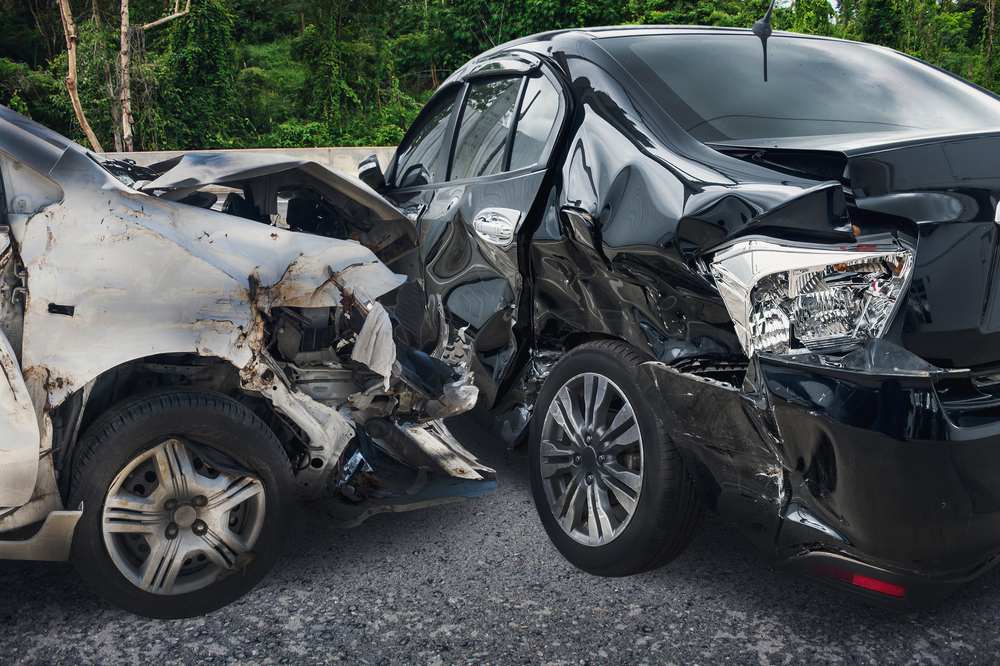
A Portage County car accident lawyer at Anderson O'Brien represents people who have been injured in crashes throughout the county. Whether the collision happened on I-39 near Plover, along Highway 10, or on a rural county trunk highway outside Amherst, the insurance disputes that follow tend to look the same.
The adjuster has questions about fault, the medical bills keep arriving, and an early offer may not account for treatment, work restrictions, or limitations that remain uncertain.
Our attorneys have handled these claims across central Wisconsin since 1886. We review the crash evidence, address fault disputes, organize medical and employment records, and push back when an insurer undervalues what happened.
If a Portage County car accident has left you dealing with an insurer that questions your injuries or your account of the crash, contact Anderson O'Brien at (715) 344-0890 for a free initial consultation.
Are you looking for legal advice?
Let one of our experienced attorneys assist you today.
Why Choose Anderson O'Brien for Your Portage County Car Accident Claim?
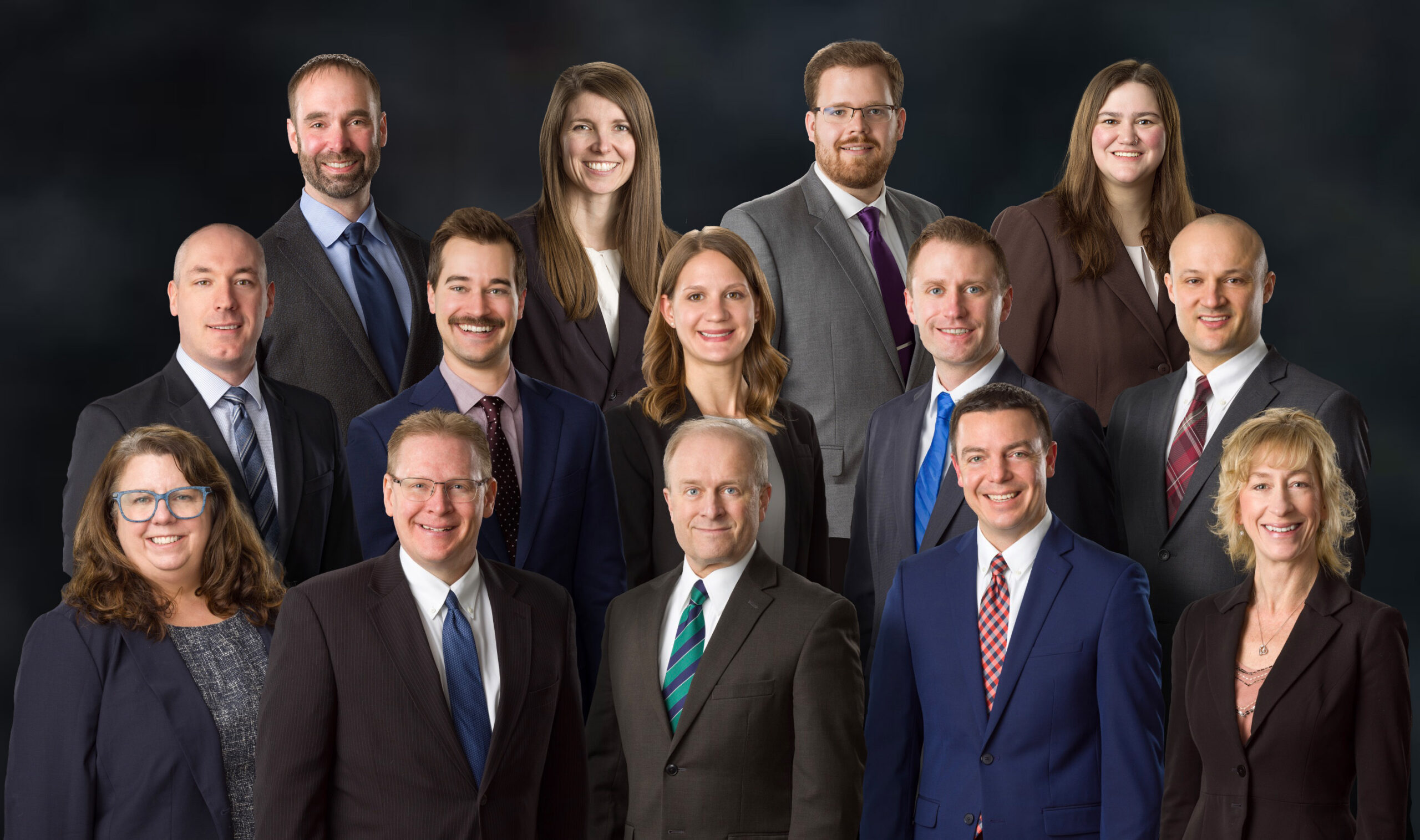
Anderson O'Brien brings a Portage County presence and a team-based approach to serious injury, insurance, and liability disputes. That history matters because car accident claims in Portage County involve local agencies, local courts, and local insurance adjusters.
Anderson O'Brien combines deep Portage County roots with attorneys who handle personal injury claims, insurance coverage questions, liability disputes, and litigation. That background helps the team anticipate disputes over fault, medical treatment, available coverage, and documented losses.
We also take a team approach. Each attorney at the firm concentrates in one or more practice areas, and our ability to draw on that combined knowledge is part of what sets the firm apart in central Wisconsin. For a car accident claim, that might mean pairing knowledge of insurance coverage disputes with litigation preparation if the case requires it.
The firm offers free initial consultations, and no attorney fees are owed unless Anderson O'Brien recovers compensation for the client.
What Happens When the Insurer Disputes Fault After an Apparently Clear Crash?
A police report and a traffic citation help establish what happened, but they do not automatically resolve a car accident insurance claim. The insurer reviews the crash independently and may reach a different conclusion about who bears responsibility and how much.
Maybe the other driver received a citation for running a stop sign on a county road near Junction City. The crash report supports your version of events. But the adjuster still questions your speed, your reaction time, or whether you had enough visibility to avoid the collision.
That gap between what seems obvious and what the insurer actually accepts is where many disputes begin.
How Does Wisconsin's Comparative Negligence Rule Affect a Claim?
Wisconsin follows a modified comparative negligence standard under Wis. Stat. § 895.045. In plain terms, an injured person may still recover compensation even after being assigned a share of fault, but the amount is reduced by that percentage.
Recovery is barred entirely if the injured person's negligence is greater than the negligence of the person from whom they seek recovery.
If an insurer argues you were 30 percent at fault for a crash on State Highway 54 and a jury agrees, your compensation is reduced by 30 percent. If the insurer convinces a jury that the number is 51 percent or higher, you recover nothing.
That is why fault percentages matter so much in Portage County car accident claims. A few percentage points in either direction may change the value of the case dramatically. Anderson O'Brien reviews the physical evidence, crash report, witness statements, and vehicle data to challenge inflated fault arguments before they take hold.
What Evidence Helps Resolve a Fault Dispute?
The strength of a fault argument depends on what records exist and how clearly they support one version of events.
An insurer may accept one part of a claim while disputing another. Matching each disagreement with the records that address it helps show where the claim needs stronger documentation.
| Claim Dispute | What You May Experience | Records That May Matter |
|---|---|---|
| Disputed fault | Drivers give conflicting accounts of the crash | Crash report, scene photographs, bodycam video, witness statements, vehicle event data |
| Medical causation | The insurer points to symptoms that predated the collision | Treatment records, diagnostic imaging, physician notes on new limitations |
| Lost income | Work restrictions are questioned or minimized | Pay stubs, employer letters, schedules, vocational assessments |
| Limited insurance | Documented losses exceed one policy's limits | Liability, umbrella, uninsured motorist, and underinsured motorist policy details |
| Long-term injury | Recovery remains uncertain months after the crash | Specialist referrals, therapy notes, future care estimates |
Anderson O'Brien gathers and organizes this evidence early in the process. Waiting too long to preserve records, particularly electronic vehicle data or surveillance footage, may mean losing access to information that supports the claim.
Why Does Medical Causation Create Problems in Car Accident Claims?
An insurer may separately examine whether the collision caused each claimed injury and treatment expense. Proving that a crash happened is one issue. Proving what harm it caused is a separate and often more difficult problem.
Maybe you went to the emergency department at Aspirus Stevens Point Hospital the night of the crash. Initial imaging looked normal. But two weeks later, the pain in your neck or lower back became significantly worse, and your primary care physician referred you to a specialist.
The insurer may argue that the delayed onset means something other than the crash caused the problem, or that the treatment was excessive, or that a prior condition, not the collision, explains the new limitations.
What If You Had a Preexisting Condition Before the Crash?
A preexisting condition does not disqualify a claim. Wisconsin law recognizes that a person may recover for aggravation of a prior condition when a crash makes it meaningfully worse.
The problem is documentation. If your medical records show prior neck treatment and the crash caused new or worsened neck symptoms, the insurer may treat those as the same issue.
Anderson O'Brien works with treating physicians to distinguish preexisting conditions from crash-related changes, using imaging comparisons, updated restrictions, and clinical notes that address the difference directly.
What If Treatment Was Delayed or Interrupted?
Gaps in medical treatment give insurers a reason to question whether the injuries were as serious as claimed. Sometimes the gap has a straightforward explanation.
A patient might not get a specialist appointment for three weeks. Transportation in rural Portage County communities like Rosholt or Almond may make follow-up visits difficult.
Our attorneys document those gaps and the reasons behind them. A treatment timeline that accounts for scheduling delays, insurance pre-authorization requirements, or geographic barriers is far stronger than one that leaves the gap unexplained.
Contact Anderson O'Brien at (715) 344-0890 if an insurer is questioning your medical treatment or the connection between the crash and your injuries.
Are you looking for legal advice?
Let one of our experienced attorneys assist you today.
What Does a Portage County Car Accident Lawyer Actually Do?
A Portage County car accident lawyer reviews the insurer's evidence, identifies missing documentation, calculates losses, and manages claim communications. It means having someone build a file that reflects the full scope of the harm rather than accepting the insurer's initial evaluation.
At Anderson O'Brien, that work typically includes the following steps in a Portage County car accident claim:
- Reviewing the crash report filed by the Portage County Sheriff's Office, Stevens Point Police Department, or another responding agency and identifying inconsistencies or missing details
- Identifying every applicable insurance policy, including liability, uninsured motorist, underinsured motorist, and medical payments coverage
- Organizing medical records, diagnostic imaging, and physician restrictions into a timeline that connects the crash to the documented injuries
- Calculating lost wages, reduced earning capacity, and out-of-pocket expenses using employment records and financial documentation
- Communicating directly with the insurer so you are not pressured into recorded statements or premature settlement offers
An adjuster may request a recorded statement or medical authorization early in the claim. Those requests help the insurer evaluate the claim and may seek information broader than the crash-related issues. Having an attorney handle that communication protects the claim from early mistakes that are difficult to undo.
People whose injuries involve more than a vehicle collision may also need the broader perspective of a Portage County accident and personal injury lawyer.
What Compensation May Be Available After a Portage County Car Accident?

A car accident injury claim in Wisconsin may include both economic and non-economic losses. Economic losses are the documented, measurable costs. Non-economic losses address the personal impact that does not come with a receipt.
The types of losses that commonly appear in Portage County car accident claims include:
- Medical expenses already incurred, including emergency care, surgery, imaging, physical therapy, and prescription costs
- Estimated future medical treatment when recovery is ongoing or additional procedures are anticipated
- Lost wages from missed work during treatment and recovery
- Reduced earning capacity when injuries limit the type or amount of work a person is able to perform
- Pain, physical limitations, and loss of enjoyment of daily activities in the past and the future
Each category requires its own documentation. A claim for lost wages, for example, needs more than a statement that you missed work. It requires pay records, employer verification, and evidence connecting the work absence to the injuries.
Anderson O'Brien calculates these losses using the records themselves, not rough estimates. That approach produces a demand that reflects documented harm rather than a number the insurer finds easy to dismiss.
How Long Do You Have to File a Car Accident Claim in Wisconsin?
Wisconsin law sets specific deadlines for filing a car accident lawsuit, and missing the deadline generally bars the claim permanently.
For most car accident injury claims, the filing period is three years from the date of the accident. That applies to claims seeking compensation for personal injuries caused by or arising from a motor vehicle accident.
What About Fatal Car Accident Claims?
Wisconsin applies a shorter deadline to wrongful death claims that arise from motor vehicle accidents. Under Wis. Stat. § 893.54(2m), a claim for death caused by a motor vehicle accident must be filed within two years.
This shorter deadline applies specifically to motor vehicle fatalities. Other wrongful death claims that do not involve a motor vehicle accident generally follow the standard three-year period.
That distinction catches families off guard. A surviving spouse or adult child dealing with a fatal crash on I-39 or Highway 10 has one fewer year to file than someone pursuing an injury claim from the same type of collision.
Anderson O'Brien advises families in these situations to consult an attorney early so that the shorter deadline does not quietly expire while they are still processing what happened.
Claims involving a government entity may follow additional notice and filing rules, making an early case-specific review important. The safest approach is to have an attorney review the timeline before assuming the full period applies.
What If the Other Driver Has Little or No Insurance?
Your own uninsured or underinsured motorist coverage may provide another source of compensation when the at-fault driver lacks sufficient insurance.
Wisconsin requires drivers to carry motor vehicle liability insurance, and the Wisconsin Office of the Commissioner of Insurance provides consumer guidance on minimum coverage requirements and optional policy types. But legal requirements and actual compliance are two different things.
Uninsured motorist coverage applies when the other driver has no insurance at all. Underinsured motorist coverage may apply when the other driver's policy limits fall short of your total damages and losses.
Anderson O'Brien reviews every applicable policy early in the process. That includes the at-fault driver's liability coverage, your own UM and UIM coverage, and any medical payments coverage that may apply regardless of fault.
Identifying potentially available coverage before negotiations reduces the risk of overlooking a policy that may apply.
Are you looking for legal advice?
Let one of our experienced attorneys assist you today.
Where Do Portage County Crash Records and Court Filings Come From?
Portage County crash records come from the responding law enforcement agency, while civil filings go through the appropriate Wisconsin circuit court. Knowing where records originate matters because different agencies control different documents, and delays in obtaining the right record from the right source may slow a claim.
Which Agencies Handle Portage County Crash Reports?
The agency that files the crash report depends on where the collision occurred. The Portage County Sheriff's Office responds to crashes in unincorporated areas and works alongside local and state agencies.
The Stevens Point Police Department and Plover Police Department handle crashes within their respective city limits. The Wisconsin State Patrol may respond to incidents on I-39 and other state highways.
Traffic crash reports from the Portage County Sheriff's Office dating from July 2017 onward are available through the county's CrashDocs system.
When law enforcement does not file a report, the driver may need to submit a Driver Report of Crash (Form DT4002) to the Wisconsin Department of Transportation for a reportable collision.
Where Would a Car Accident Lawsuit Be Filed?
A civil lawsuit related to a Portage County car accident may proceed through the Portage County Circuit Court, depending on venue and the facts of the case.
Many car accident claims resolve through negotiation without a trial. Some cases proceed into litigation and later resolve through mediation or continued negotiations.
When litigation is required, Anderson O'Brien prepares the case with the same level of documentation used in negotiation. The evidence that supports a strong settlement demand is the same evidence that supports a strong courtroom presentation.
FAQs for Portage County Car Accident Claims
Do I Need a Lawyer if the Other Driver Admitted Fault?
Yes. The driver's admission does not bind the insurance company. The insurer conducts its own investigation and may still argue shared fault, question the severity of injuries, or dispute specific categories of loss. An attorney reviews whether the insurer's position matches the available evidence.
Where Do I Obtain a Portage County Crash Report?
Reports filed by the Portage County Sheriff's Office from July 2017 onward are available through the county's CrashDocs system. For crashes within Stevens Point or Plover city limits, contact the responding police department directly. State Patrol reports are available through the Wisconsin Department of Transportation.
Does Hiring a Car Accident Lawyer Mean My Case Goes to Trial?
No. Hiring a lawyer does not mean the case automatically goes to trial. Many Portage County car accident claims resolve through negotiation, and some proceed into litigation before resolving through mediation or continued discussions. Anderson O’Brien attorneys prepare every case as if it needs to be tried to a jury so they are in the strongest position against the insurance companies.
Can a Passenger Bring a Car Accident Claim in Wisconsin?
Yes. A passenger injured in a car accident may file a claim against the at-fault driver's insurance, regardless of which vehicle the passenger occupied. If the driver of the passenger's own vehicle was at fault, the claim may proceed against that driver's policy. An attorney reviews the facts and applicable policies to identify where coverage exists.
What If the At-Fault Driver Was Using Someone Else's Vehicle?
The vehicle owner's policy may provide coverage when the driver had permission to use the vehicle. Policy exclusions, household relationships, and other available insurance may affect which coverage applies and in what order. An attorney may review the policy language and ownership records before identifying the available coverage.
When Should You Contact a Portage County Car Accident Lawyer?
Sorting through insurance disputes, medical records, and fault arguments after a Portage County car accident is not something you need to handle alone.
Anderson O'Brien has worked with injured people across central Wisconsin for more than a century. Our attorneys understand the local agencies, courts, and insurance patterns that shape these claims.
The firm offers free initial consultations, and no attorney fees are owed unless Anderson O'Brien recovers compensation for the client. Your first conversation with our team is free and carries no obligation.
Call (715) 344-0890 or visit our contact page to schedule a consultation. We review the facts, explain what Wisconsin law allows you to pursue, and help you make an informed decision about how to move forward.
Are you looking for legal advice?
Let one of our experienced attorneys assist you today.